Selected publications & working papers

Research.

My research examines talent, financial markets, and the decisions that shape firms and innovation.

Showing all 10 working papers

01 / Working paper
Innovation · Labor and Finance

Adverse Home Country Shocks, Invention Migration, and Geography of Innovation

Solo-authored

How do adverse country shocks reallocate inventors globally and reshape the geography of frontier innovation?

Full Abstract

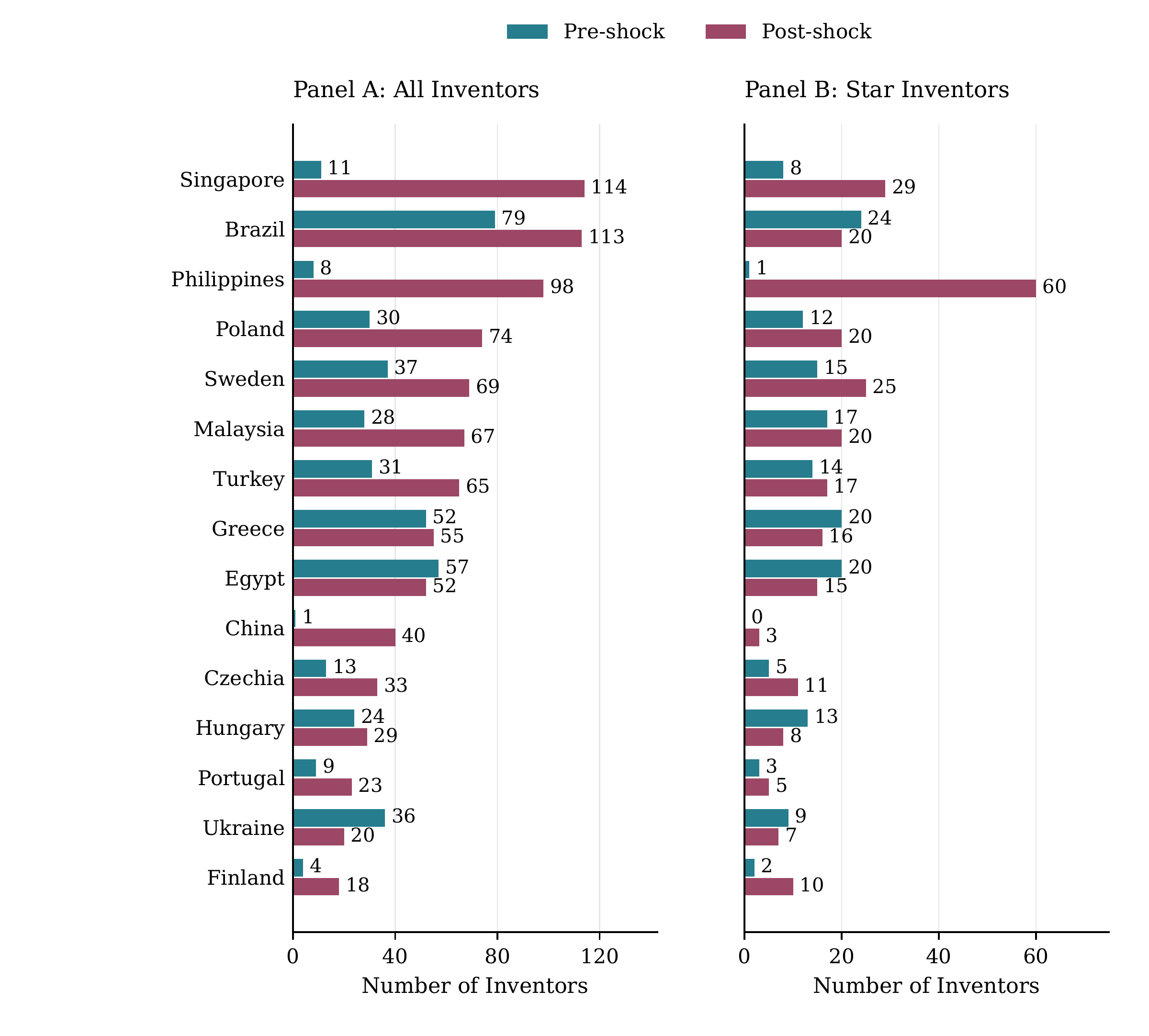
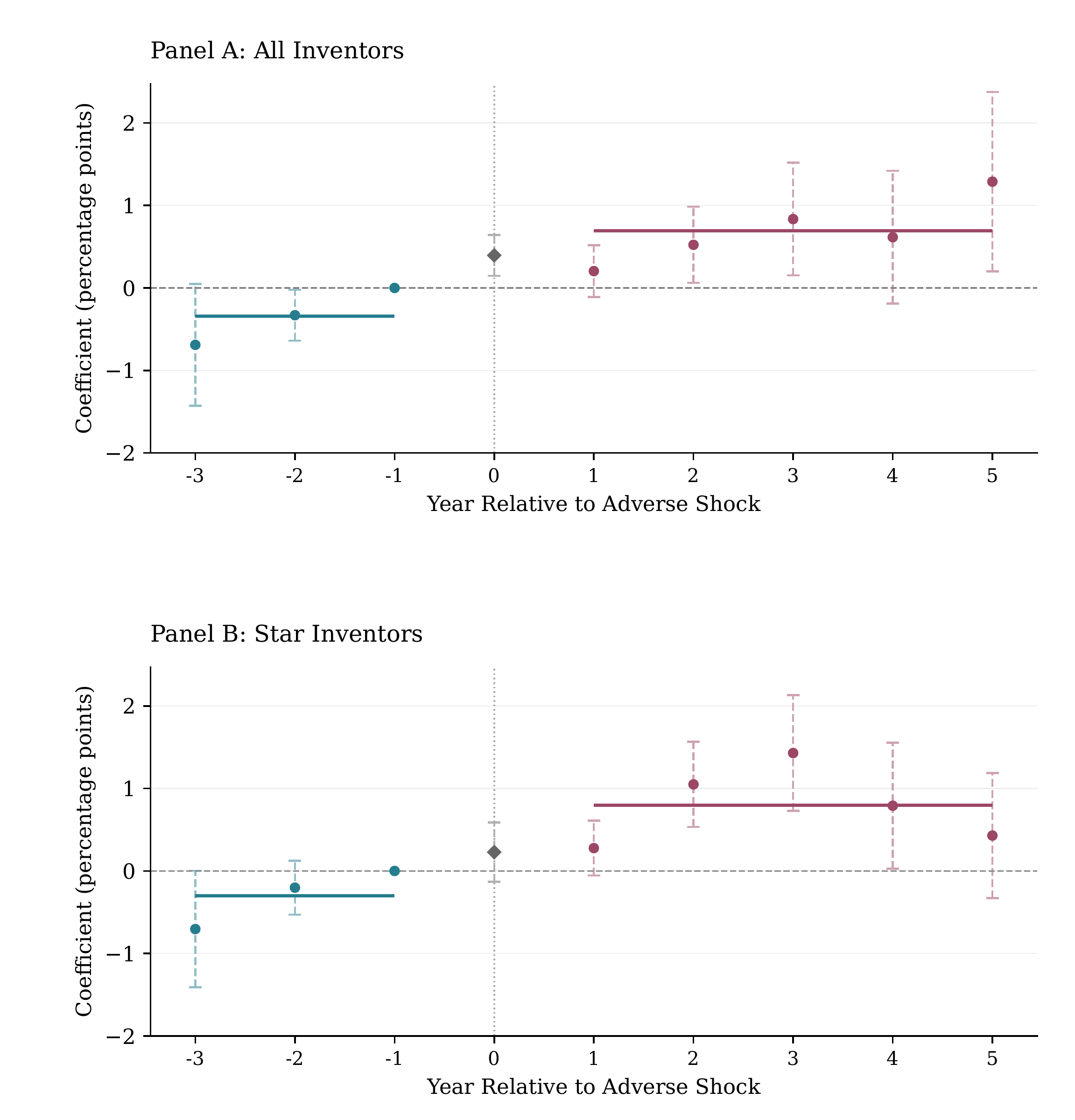
When home-country conditions deteriorate, who leaves, and where does their talent go? We develop a theoretical framework linking adverse conditions to migration, recruitment, and innovation. Linking USPTO records of granted patents and published applications, we follow 1.23 million inventors around 47 adverse country events since 1985. Shocks raise the annual probability of moving to the United States by 0.8 percentage points, about 70 percent of the baseline rate. The increase is similar for star and non-star inventors and larger after political and economic deterioration than security and conflict events. U.S. firms with prior business ties to affected countries hire more inventors from those origins, including stars, and subsequently produce more high-impact patents, with no significant increase in total patent counts. Recruited inventors participate directly in these inventions, while aggregate patenting declines in the origin countries. Chinese-origin departures also rise at firms with federal research ties following the DOJ’s China Initiative. These findings highlight the importance of policy predictability and political stability for retaining both star inventors and the broader inventive workforce.
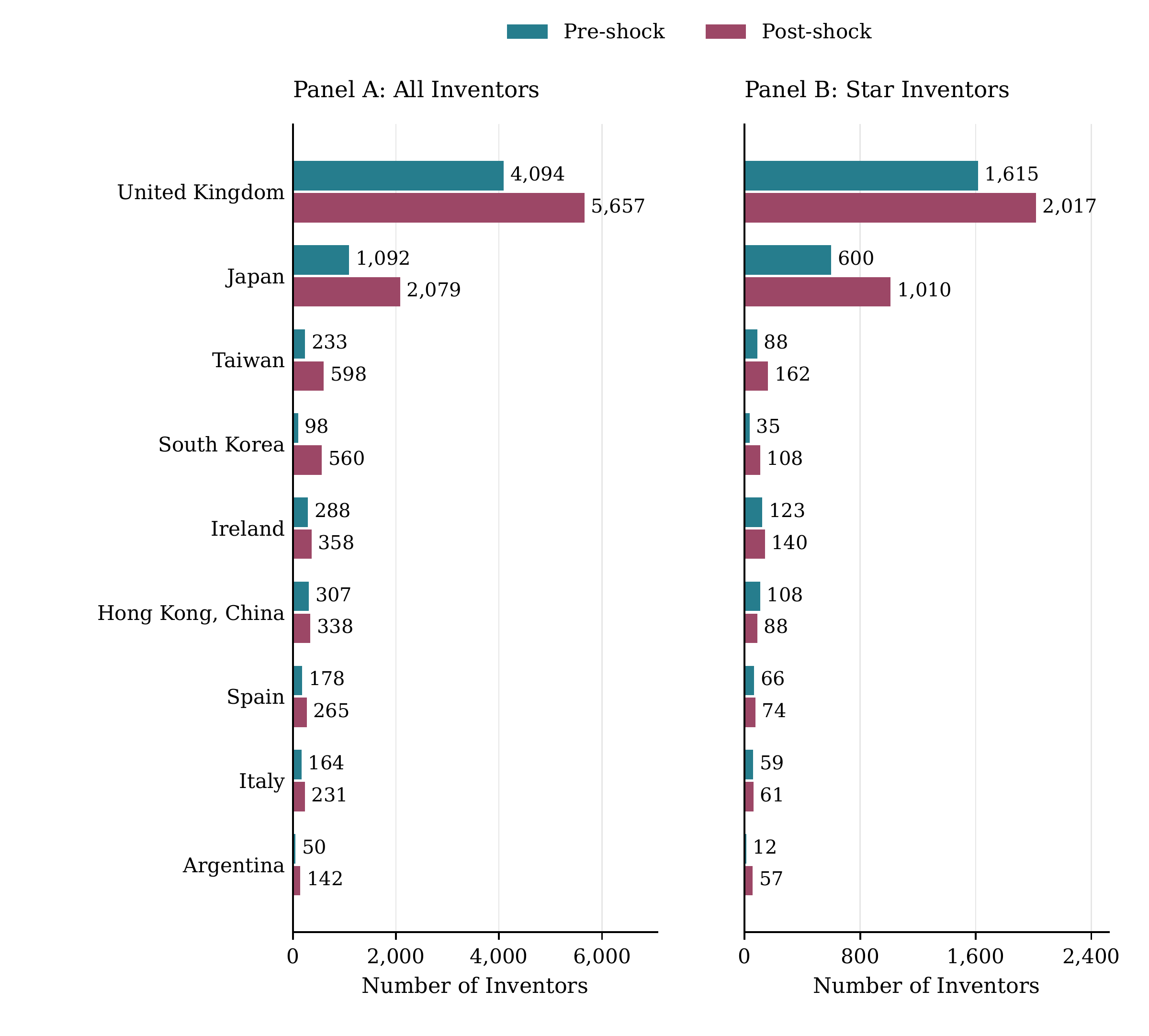
Inventor outflows to the United States before and after adverse country shocks: first nine source countries. All movers and star inventors, five years before versus five years after each shock; shock year excluded. Descriptive counts.
02 / Working paper
Real Effects of Financial Market Frictions

When “Milliseconds” Matter

The Real Effects of High-Frequency Trading

With Bo Hu, Amy Kwan & Yangen Li

Faster trading can change firms’ financing capacity and real investment.

Full Abstract

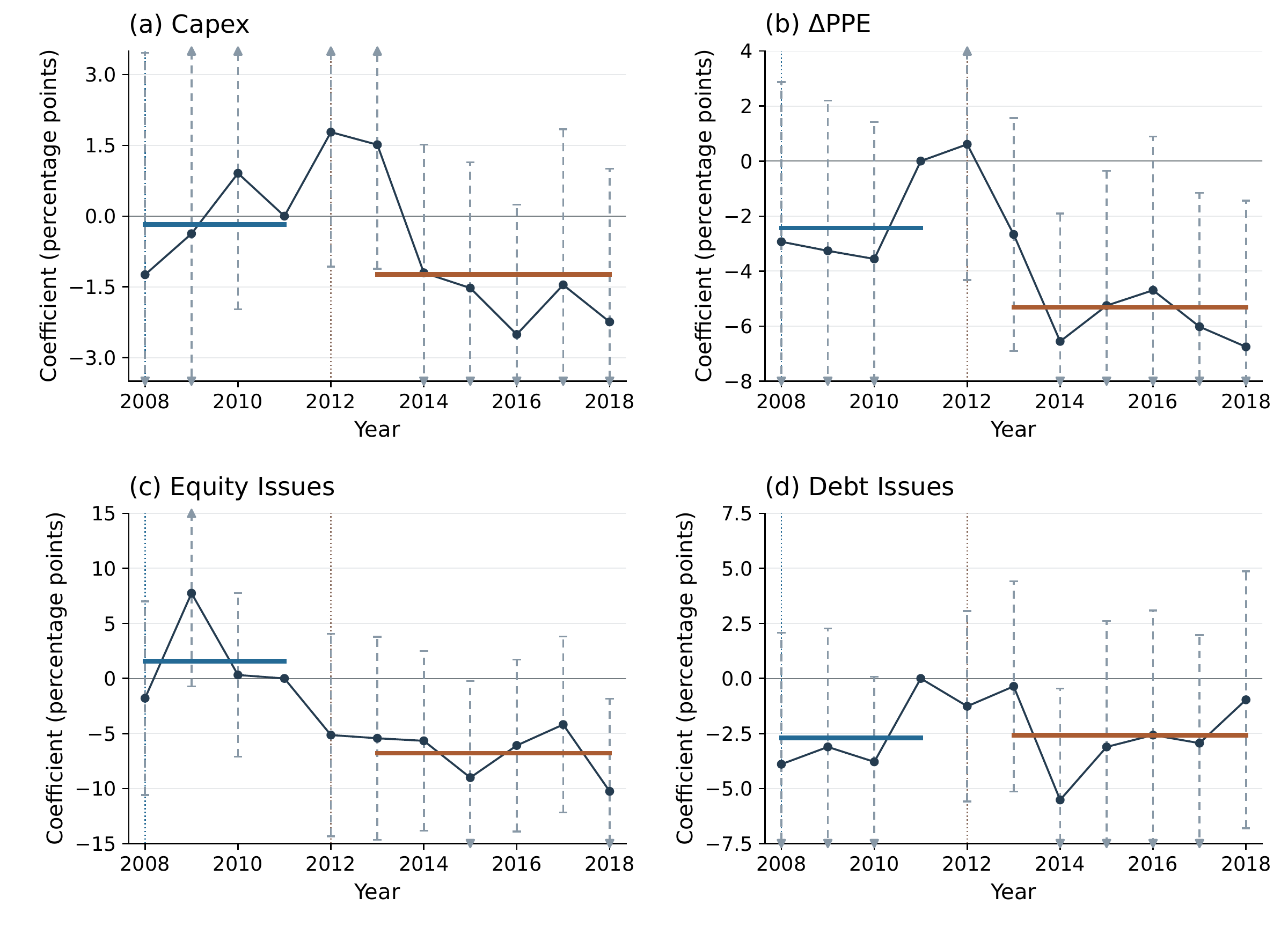
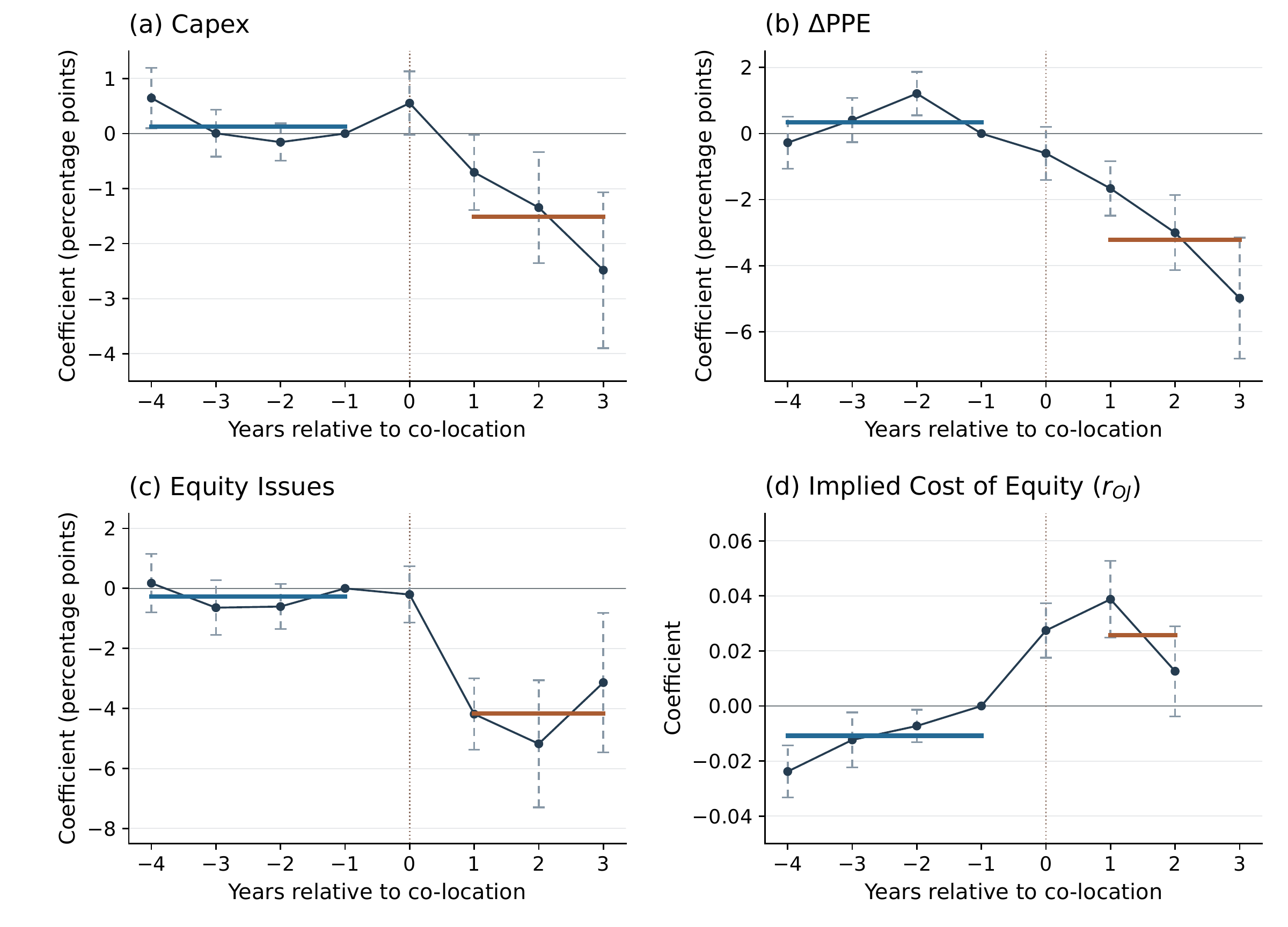
This paper examines how high-frequency trading affects corporate investment and financing. We develop a model in which HFT can increase return and liquidity comovement even though its average-liquidity effect is ambiguous. When common-risk costs dominate liquidity benefits, HFT raises the cost of equity and leads equity-dependent firms to reduce issuance and investment. Using broker-level HFT identifiers, we exploit the 2012 ASX infrastructure upgrade as exchange-side variation in HFT presence, and we find that higher HFT activity leads to sizable declines in investment and equity issuance, concentrated among firms that rely more heavily on external equity financing. The staggered global rollout of exchange co-location services provides corroborating evidence. Overall, the findings show that financial market innovations can alter firms’ financing capacity and investment decisions, providing a channel through which financial market structure may influence aggregate economic growth.

Presentations

Conferences: Monash Winter Finance Conference 2026; FMA 2025 New Idea Sessions.

Seminars: George Mason University; Chinese University of Hong Kong.

Corporate investment and financing around the 2012 ASX infrastructure upgrade. Unweighted dynamic DiD; 2011 reference and 95% firm-clustered confidence intervals. Colored segments average 2008–2011 and 2013–2018 coefficients. Triangles mark intervals beyond the plotted range.
03 / Working paper
Real Effects of Financial Market Frictions · ESG

The Bright Side of Dark Returns

Isolated Stock Price Crashes and Corporate Violations

With Lei Gao, Jeong-Bon Kim & Carolyn Wang

Stock price crashes impose losses on investors, yet they may also prompt firms to improve corporate conduct. We find that isolated crashes are followed by fewer corporate violations, especially where external monitoring and internal governance are stronger. The findings highlight a potential disciplining role for market losses.

Full Abstract

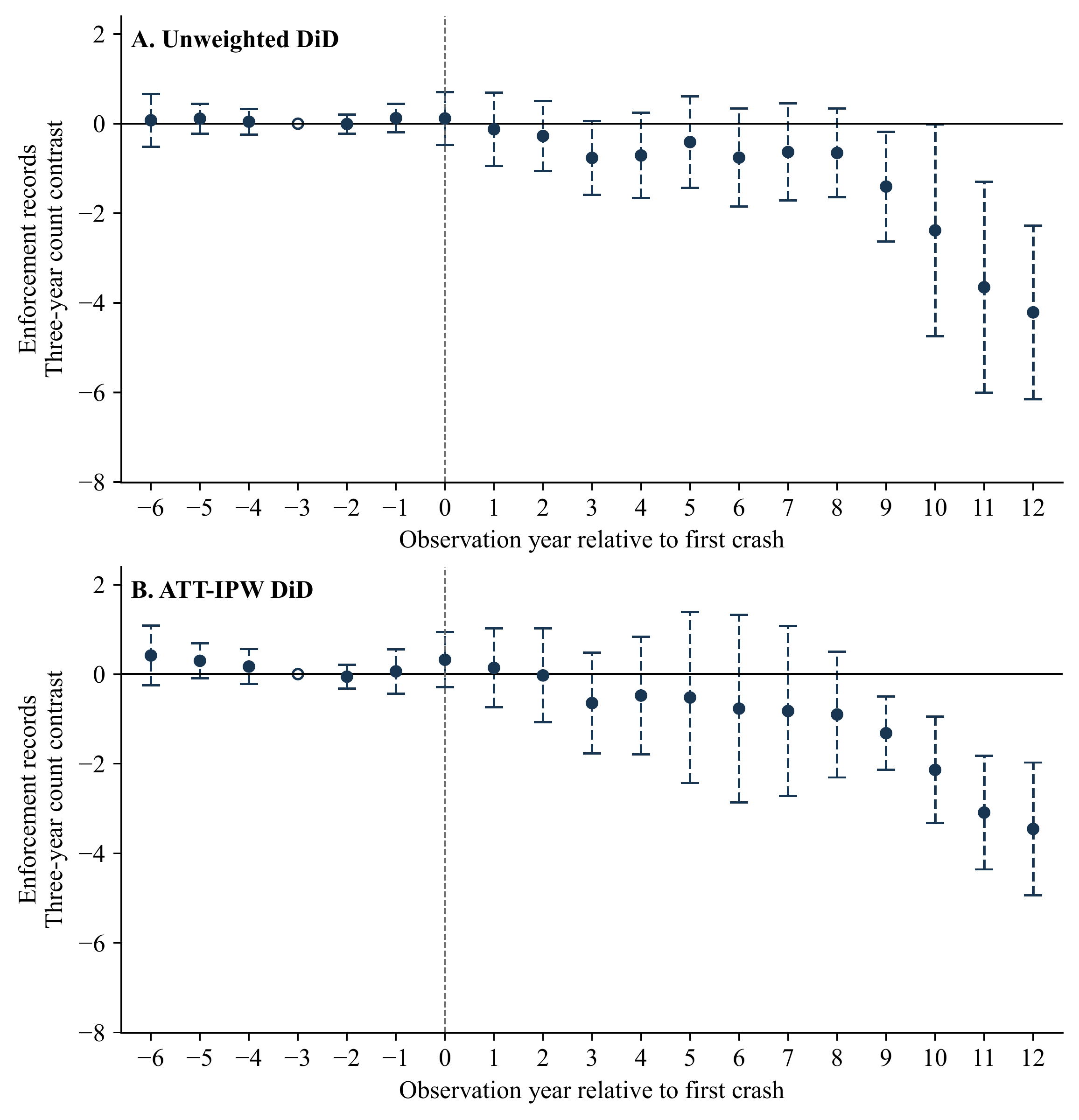
Do stock price crashes discipline firms? Using isolated crash events and an inverse probability weighted difference-in-differences design, we document a decline in corporate violations following quasi-exogenous negative shocks to firms’ market valuations. The decline is more pronounced when institutional investors have a stronger and more sustained presence and when firms have greater managerial and organizational capacity. These patterns are consistent with a disciplining response in which external monitoring creates pressure for corrective action and internal capacity helps firms implement it. Our findings suggest a bright side of market losses: the response to a stock price crash can strengthen corporate discipline and improve subsequent corporate conduct.

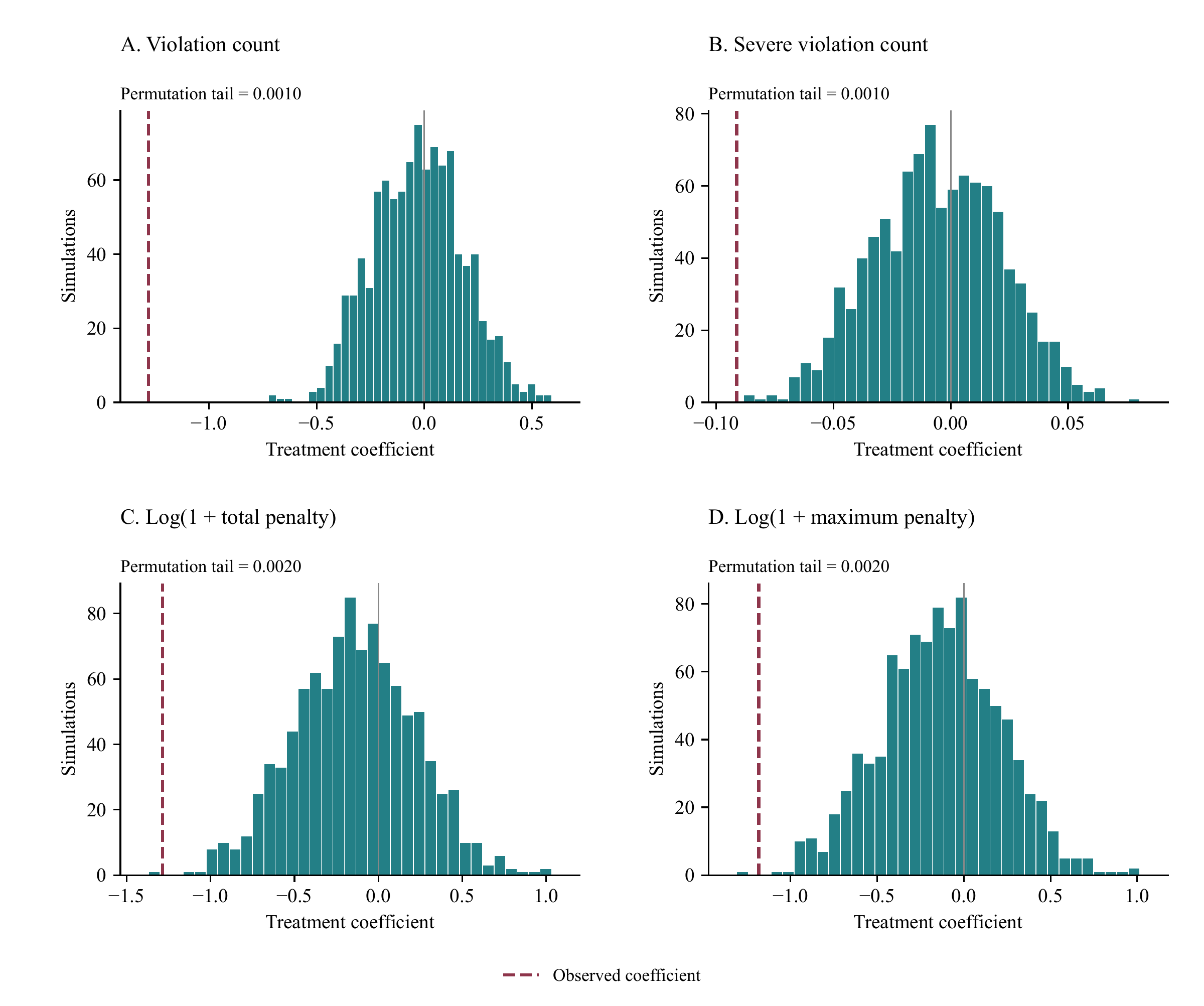
Corporate violations before and after the first crash. Forward three-year violation counts, relative to event year −3. Unweighted and ATT-IPW estimates with 95% firm-clustered confidence intervals.
04 / Working paper
Labor and Finance · ESG · Real Effects of Financial Market Frictions

Employee Dissatisfaction

and Short Selling

With Vishal Gupta and Sandra Mortal

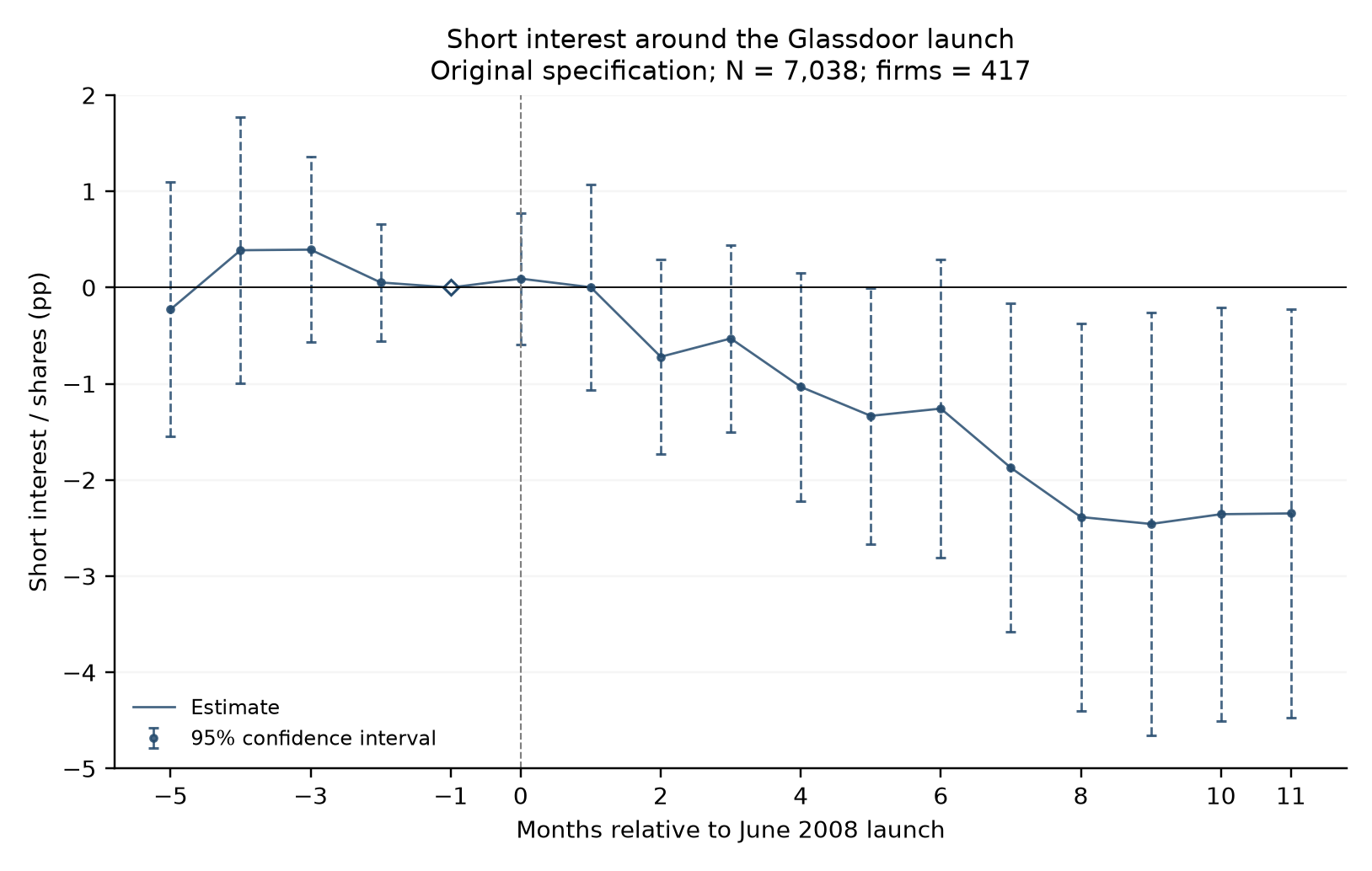
Employee reviews reveal aspects of firms’ internal workings that outsiders may struggle to observe. Firms with greater employee dissatisfaction face more short selling in the following month. The relation extends across complaints about compensation, career opportunities, work–life balance, and culture, linking workplace experiences to scrutiny in capital markets.

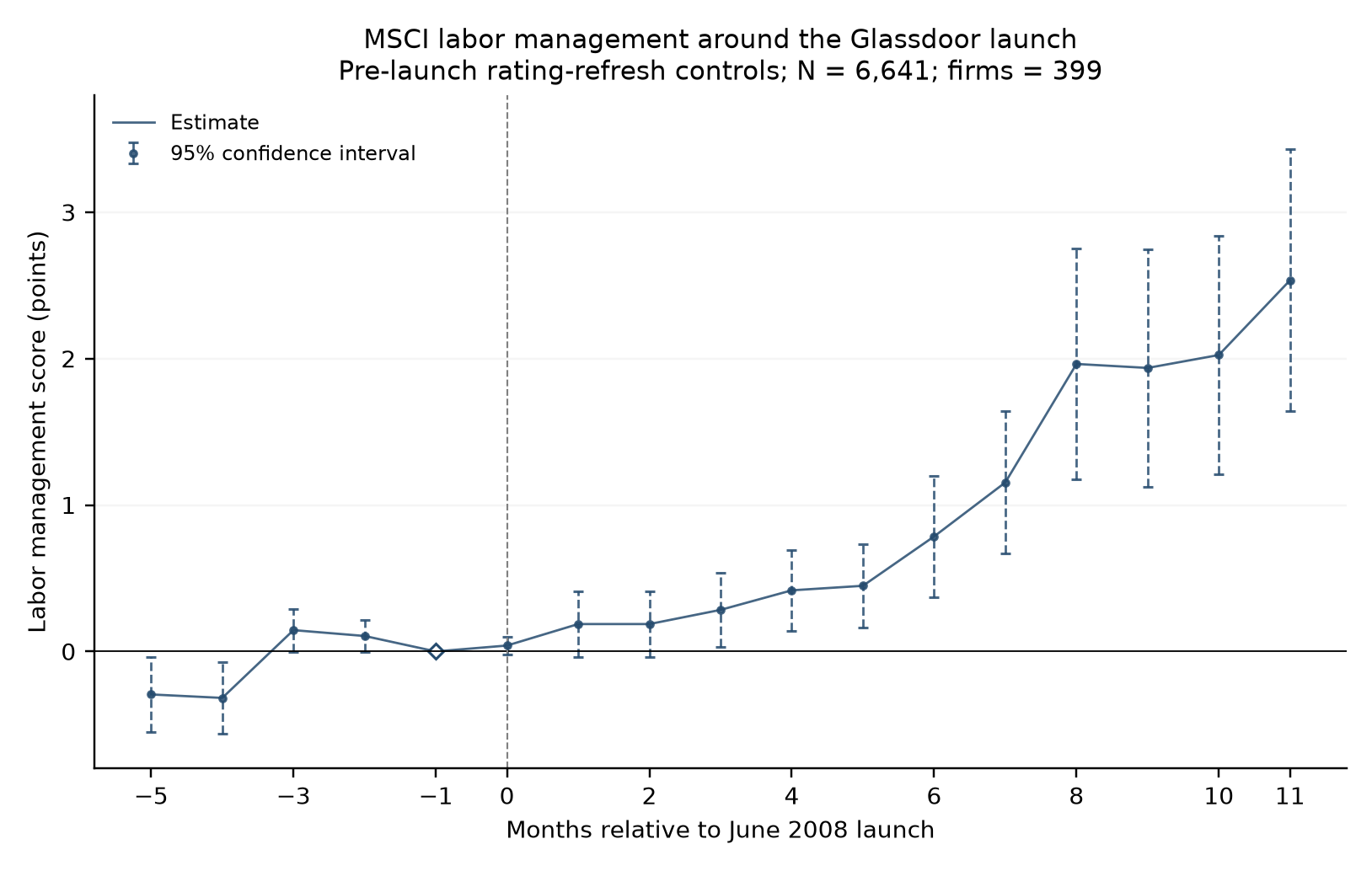
Labor-management scores around the launch of Glassdoor. Dynamic estimates with 95% firm-clustered confidence intervals; 399 firms. Includes an exploratory adjustment for pre-launch rating refreshes. The MSCI score measures labor management, not employee satisfaction directly.
05 / Working paper
AI and Finance · Innovation · Empirical Asset Pricing

Seeing Is Believing

Annual Report Visuals and Stock Returns

With Lei Gao, Bo Hu & Guofu Zhou

Under second-round review at Management Science

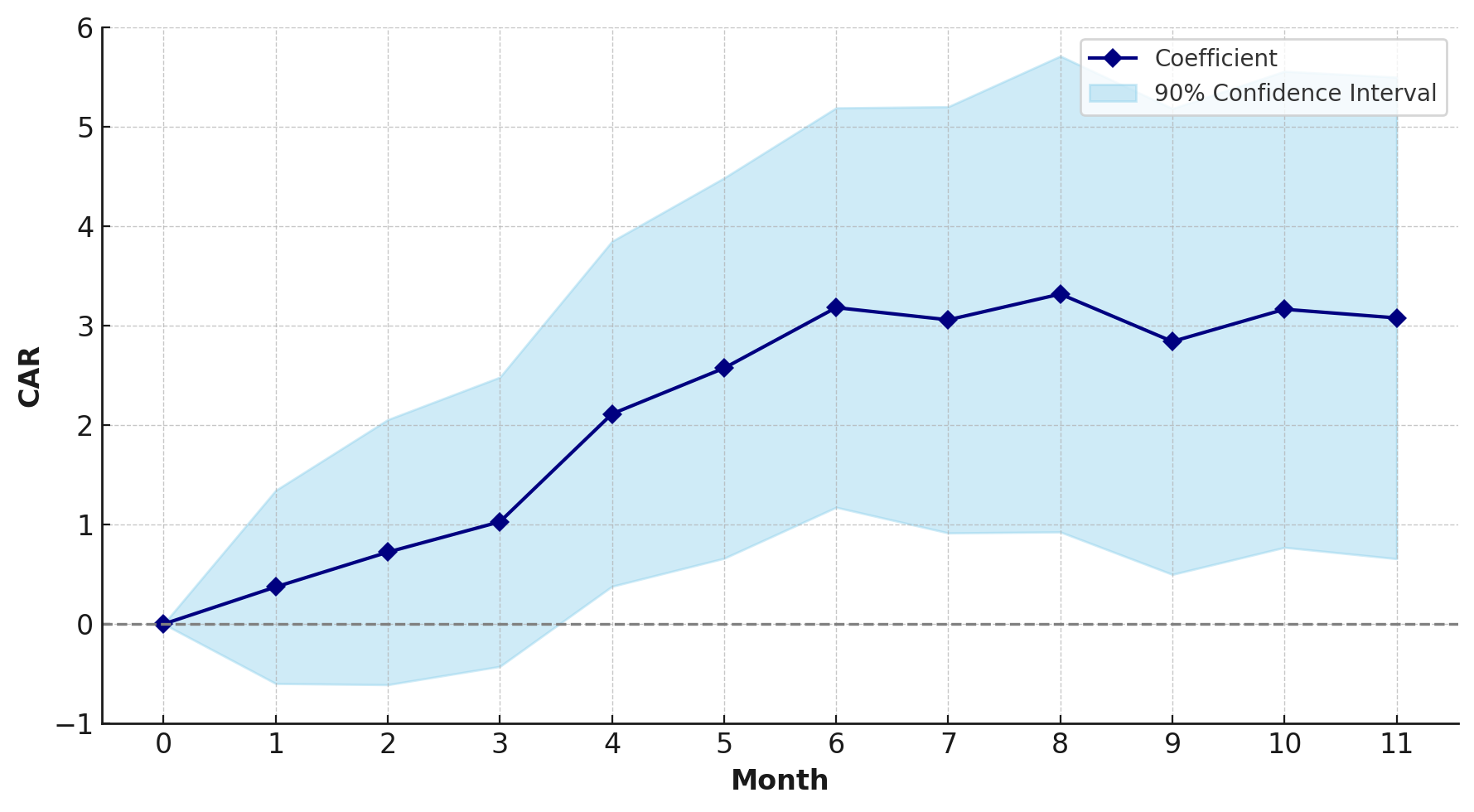
Annual-report visuals communicate information that numbers and text can miss. Firms introducing illustrative visuals earn 3–5% abnormal returns, preceded by greater institutional attention. The response is strongest for innovation and technology imagery, while data-oriented graphics show no comparable return pattern.

Full Abstract

Why do companies release visually enhanced annual reports that seem redundant with their 10-K filings? We develop a novel model and provide evidence, by employing multiple AI deep learning models for empirical analysis, that firms earn 3–5% abnormal returns after adding visuals to their annual reports, preceded by a surge in institutional investor attention. Firms using data-oriented graphics show no abnormal returns, whereas those with illustrative visuals highlighting innovation and technology exhibit stronger effects. Moreover, firms adopting R&D-focused visuals experience notable increases in patents granted and radical innovation, suggesting visuals mitigate investor inattention and convey nuanced fundamental information.

Presentations

Conferences: AI in Finance Conference 2025; Australasian Finance and Banking Conference 2024; European Finance Association Annual Meeting 2024; Bretton Woods Ski Conference 2023; SFS Cavalcade Asia-Pacific 2022; China International Conference in Finance 2022.

Seminars: Washington University in St. Louis; Syracuse University; Rutgers University; University of Nevada, Las Vegas; University of Liverpool; University of Melbourne; Cheung Kong Graduate School of Business; CUHK-Shenzhen; University of Bath.

Illustrative visuals from annual reports. Healthcare, biotechnology, high-tech and innovation examples from the manuscript.
06 / Working paper
Labor and Finance · ESG

Beyond the Glass Ceiling

Do Bamboo Ceilings Exist?

With Amy Kwan, Vishal Gupta & Sandra Mortal

Asian professionals are less likely to hold board seats than similarly qualified peers. The gap is smaller in R&D-intensive industries and ethnically diverse states, and narrows when candidates have prior working relationships with the board chair. The paper examines how organizational environments and professional networks shape access to corporate leadership.

Full Abstract

This study investigates the representation gap in directorship positions for individuals of Asian descent, quantifying a 6% lower likelihood of holding such roles compared to their equally qualified counterparts. Employing Donald Trump’s presidency as a shock that generates plausible exogenous variations in labor market barriers faced by Asian professionals and a matching approach, we show that our findings are robust to endogeneity concerns. In addition, we discover that this underrepresentation is lower for companies operating in more inclusive settings, such as those in the R&D intensive sectors and in ethnically diverse states. Additionally, pre-existing relationships and familiarity further narrow this disparity.

Presentations

Conferences: Boca Finance Conference 2025; FIRN 2024.

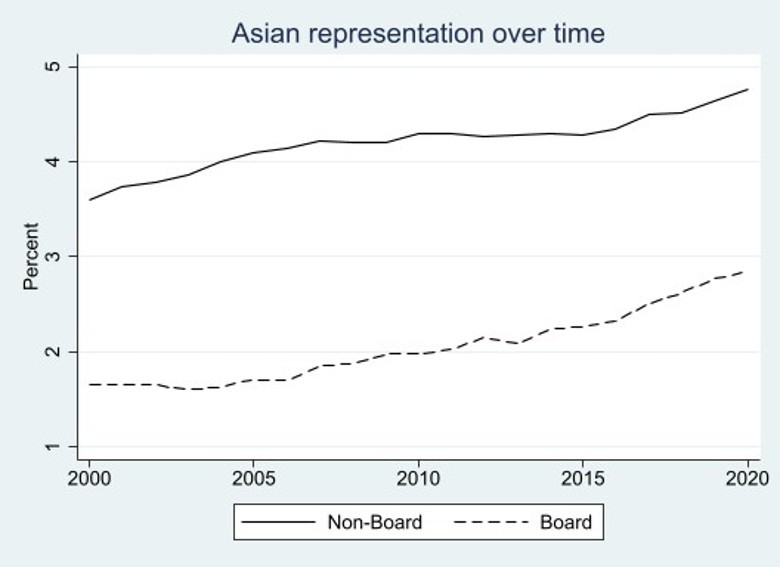
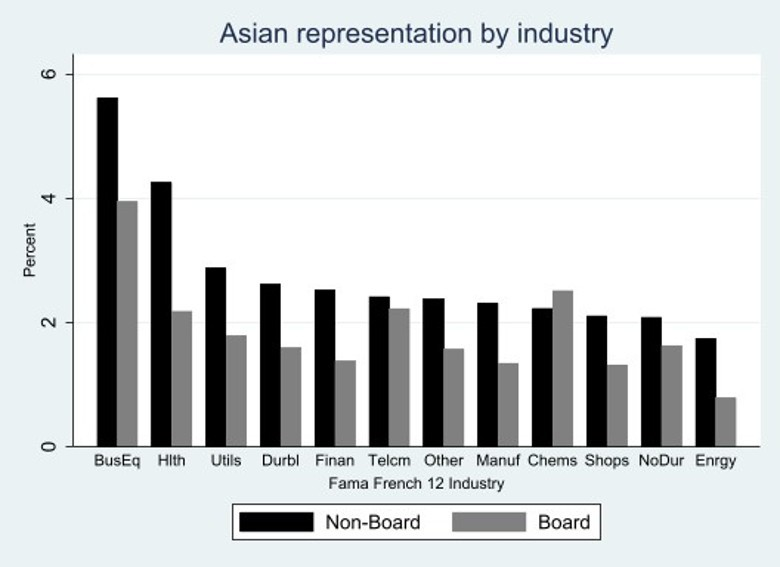
Asian representation in board and non-board roles. Shares of BoardEx individuals classified as Asian in board and non-board positions, 2000–2020.
More working papers

Other working papers

Gender, Firm Leadership, and Innovation

With Lei Gao & Jianlei Han

Companies headed by women produce approximately 50% more patents and citations, relative to those led by men.

Paper status: New version coming soon.

Presentations

Conferences: FMA Asia-Pacific 2022; Australasian Finance and Banking Conference 2022.

Seminars: UNSW Sydney; Temple University; Curtin University.

Firm Inflexibility and Corporate Tax avoidance

With Fariz Huseynov, Sabuhi Sardarli & Chao Zhou

Inflexible firms are more likely to engage in tax avoidance, primarily through tax-saving avoidance.

Presentations

Conferences: FMA 2023; FIRN 2023; New Zealand Finance Meeting 2022.

SSRN ↗

Volatility Spillovers in Supply Chain Networks: (Machine) Learning Systemic Risk

With Vladimir Volkov & Adnan Habib

Customers are net transmitters of volatility shocks, while suppliers are net receivers; spillovers are strongest toward competitors rather than partners.

Presentations

Conferences: FMA Asia-Pacific Doctoral Consortium 2022; FIRN PhD Symposium 2022.

SSRN ↗

Geopolitical Tensions and Technological Innovation

With Vivek Astvansh & Adnan Habib

Innovation output worsens amid rising geopolitical risk, potentially through the loss of critical talent and lower R&D investment.

Presentations

Conferences: Australasian Finance and Banking Conference 2022; FIRN PhD Symposium 2022.

Seminars: Massey University; Indian Institute of Management; Indiana University; University of Science and Technology Beijing.

SSRN ↗
Published research

Selected Publications

Short-Sale Constraints and Corporate Investment

With Vishal K. Gupta, Marc L. Lipson, and Sandra Mortal

Journal of Financial and Quantitative Analysis, 58(6), 2489–2521 · 2023

Full Abstract

In a sample of non-U.S. regulatory regime shifts, we find that expanded short selling is associated with stock price declines, reductions in capital expenditure, and lower asset growth. In a reversal of results found for U.S. stocks in a study of Regulation SHO by Grullon, Michenaud, and Weston (2015), our results are stronger for large firms than for small firms. We also show that this investment effect is stronger for firms that previously relied on outside financing. Our results suggest that short-sale policies affect corporate investment and that this effect is not driven by capital constraints.

Law, Politics, and Trade Credit in China

With Senlin Miao, Zhaobo Zhu, and Fenghua Wen

Journal of Corporate Finance, 88, 102643 · 2024

Full Abstract

This paper explores the interplay between politics and law enforcement in China and its effects on firm financing decisions. By examining a sample of corporate lawsuits involving listed firms in China, we find that politically connected firms are less likely to be defendants, have higher win rates, and experience shorter litigation durations than non-connected firms. Additionally, we observe that firms with higher legal risk extend more accounts receivable and receive less accounts payable, but this relationship holds only for non-connected firms. Our findings support the financing advantage theory for politically connected firms and the legal risk compensation view for non-connected firms. Moreover, reforms in China's judicial system do not appear to mitigate the disadvantages faced by non-connected firms in terms of lawsuit outcomes and trade credit provision. Our findings suggest that well-functioned judicial independence might be still lacking in China, and that political connections continue to negatively impact law enforcement and corporate policies.

Short Selling Constraints and Politically Motivated Negative Information Suppression

With Christine Jiang and Danqing Young

Journal of Corporate Finance, 68, 101943 · 2021

Full Abstract

This study examines the effect of short selling constraints on politically motivated suppression of negative information. We use a unique setting in China, in which there are multiple exogenous changes in short selling constraints and firms have strong incentives to suppress negative information during politically sensitive periods. Results from Difference-in-Differences analyses and a regression discontinuity design show that removing short selling constraints can reduce politically motivated bad news suppression. Short selling can reduce negative information suppression through the channels of improved financial reporting quality, more voluntary disclosure from management, and more timely release of information by media. In addition, the effect of short selling on reducing bad news hoarding is more pronounced for more politically sensitive meetings and for state-owned firms located in regions with weaker market and institutional development.

Short-Sale Constraints and Stock Price Crash Risk: Causal Evidence from a Natural Experiment

With Lei Gao and Jeong-Bon Kim

Journal of Corporate Finance, 60, 101498 · 2020

Full Abstract

We examine the relation between short-sale constraints and stock price crash risk. To establish causality, we take advantage of a regulatory change from the Securities and Exchange Commission (SEC)’s Regulation SHO pilot program, which temporarily lifted short-sale constraints for randomly designated stocks. Using Regulation SHO as a natural experiment setting in which to apply a difference-in-differences research design, we find that the lifting of short-sale constraints leads to a significant decrease in stock price crash risk. We further investigate the possible underlying mechanisms through which short-sale constraints affect stock price crash risk. We provide evidence suggesting that lifting of short-sale constraints reduces crash risk by constraining managerial bad news hoarding and improving corporate investment efficiency. The results of our study shed new light on the cause of stock price crash risk as well as the roles that short sellers play in monitoring managerial disclosure strategies and real investment decisions.

Research: When Geopolitical Risk Rises, Innovation Stalls

With Vivek Astvansh and Adnan Habib

Harvard Business Review, March 3, 2022